
Garbage in, garbage out: why AI can amplify the problem
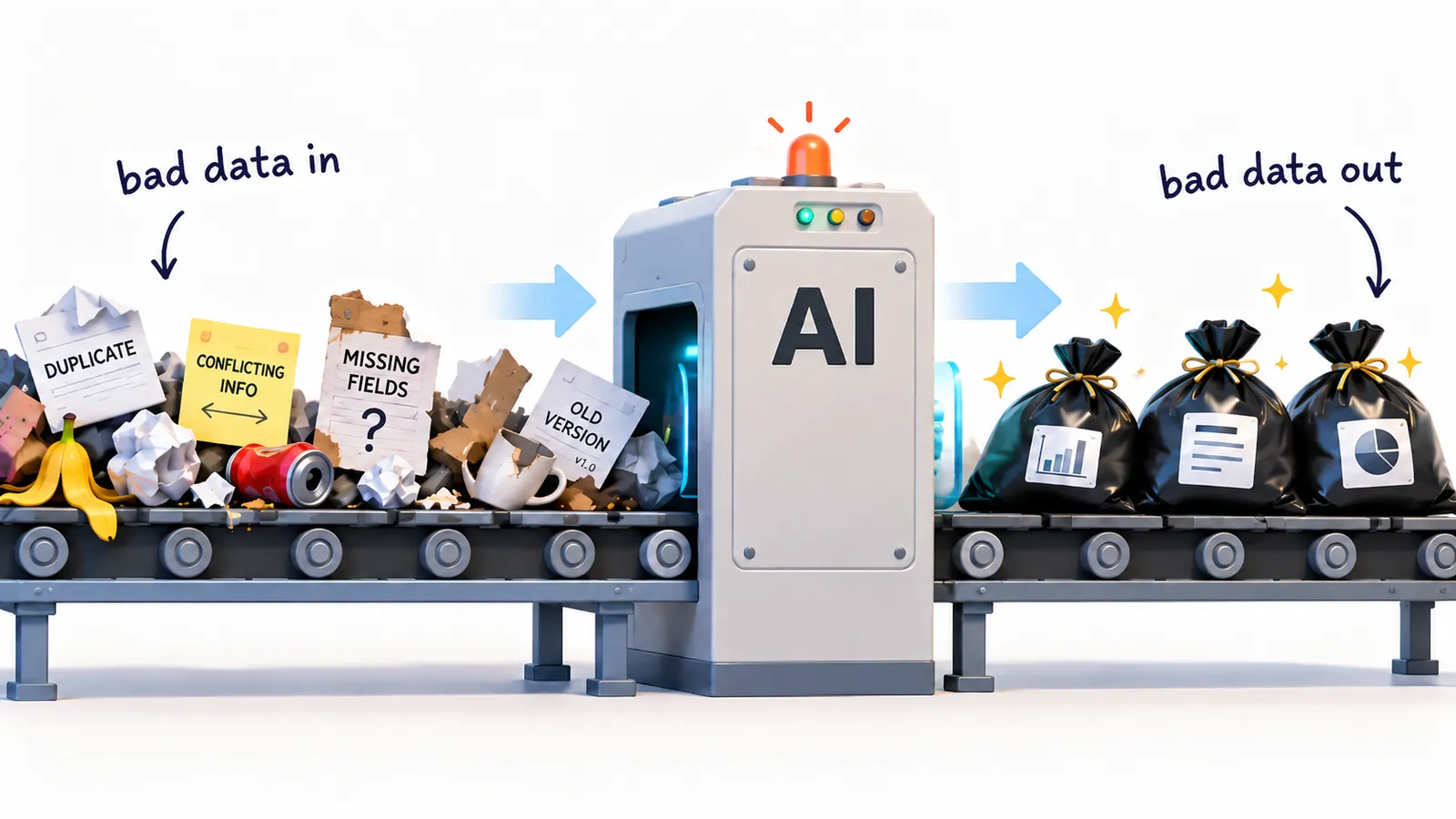
AI does not automatically fix bad data. It can repeat the errors, spread them and present them with a convincing appearance.
An old question
Charles Babbage, who conceived the analytical engine in the 19th century, recalled being asked twice whether the right answers could come out of a machine if the wrong figures were put into it. The question sounds absurd, yet it reappears every time we expect a technology to fix, on its own, the information we give it.
Over time, the idea was condensed into the phrase garbage in, garbage out: if the input data is bad, the result is affected too.
That does not mean a system cannot detect errors. It can find duplicates, inconsistencies or odd values if it is built to do so. But it cannot magically know which value is the correct one when the information is missing or contradictory.
With artificial intelligence, this problem can grow for two reasons.
First mechanism: errors can turn into a pattern
In a traditional process, one wrong value can spoil one specific result. In a machine learning model, the data also shapes how the system behaves.
A one-off mistake will not necessarily have much effect. But if errors, duplicates or biases show up often enough and go uncorrected, the model can reflect them and repeat them. Unrepresentative training data, for example, can cause some biases to be amplified.
Something similar happens when we connect an assistant to a company’s documents. If the same client has three addresses on file, or two price lists coexist without any indication of which one is current, the assistant has no clear source. It may pick one version, blend them, or give different answers depending on the context.
The problem is not only the AI. It is that the contradiction has not been resolved yet.
Second mechanism: the form can hide the problem
Bad data is not always obvious, but it often leaves clues: empty fields, totals that do not add up, undated documents or duplicate versions.
A generative model can turn incomplete or contradictory information into a tidy, fluent and confident answer. The form improves; the substance does not necessarily follow. These systems can present false or inaccurate information confidently, in a way that makes it look more reliable than it is.
That is where the danger lies: a well-written answer can make us lower our guard. But fluency is no proof of truth. A clear text may be well grounded, half wrong, or built on sources that contradict each other.
So a mistake that would once have raised doubts can end up in an email, a report or a decision simply because it arrives well presented.
AI also adds scale
When the two mechanisms combine, the effect grows. A poor value can become a repeated pattern; a convincing answer can make it hard to spot; and automation makes it possible to repeat the process many times, very fast.
That is why putting AI on top of a messy dataset does not create order by itself. First you have to decide which source is the primary one, retire the old versions, align definitions, and make clear who owns each piece of data.
That work has not been made obsolete by AI. It has become more important.